Showing posts with label photos. Show all posts

26 July 2013

Pray for this family...and the rest!

Check out this article about some awesome Americas workers! I am so blessed to know and count as friends so many individuals and families that are willing to go so far for the sake of the Gospel. Remember to pray for them and their work! 


Catching Dinner

While IMB missionaries hand-wash laundry in the background, several missionary kids fish from a log in a jungle river, hoping to catch dinner. Learning to hunt for food is part of a new IMB jungle training program in the Amazon Basin, designed to teach missionaries to live in remote, rugged places.


Missionary family ‘blessed’ to reach hard places for Christ


Brad Connelly* watches thoughtfully as his daughter and sons splash around in the jungle river beside their small cabin.

Jungle Playground

A missionary kid swings out over a river on a rope swing suspended from a tree. In the jungle, nature itself is the prime source of entertainment.Jungle Playground


A missionary kid swings out over a river on a rope swing suspended from a tree. In the jungle, nature itself is the prime source of entertainment.
Photo © 2013 IMB / Rebecca Springer
Oblivious to the rest of the world, the kids laugh and scream as they take turns flying off a rope-swing, plunging into the cool water and trying to swim against the current to a nearby rock. To them, the jungle is an exciting new adventure.
To Brad and his wife, Carissa*, it’s the risky place where they’re about to move their family. Still, sitting on his cabin porch at IMB’s new jungle training camp, Brad watches his children playing and knows it’s the right move.
The month-long training program is the final step to prepare the Connellys and their three children — ages 4, 6 and 8 — to venture deep into the heart of the Amazon jungle and work among one of the nearly 230 unengaged, unreached indigenous people groups in the Americas. Their people group is less than 2 percent evangelical Christian and no one is currently trying to reach them with the Gospel.
The community they hope to work in is restricted,  and permission to enter is hard to obtain. For the moment, the Connellys live in a nearby city, praying that God will soon open doors for them to enter and begin work in the area. Once that happens, He’ll be all they have.
They’ll be the only missionaries in their area, nearly 15 hours away from the next closest IMB personnel. Electricity will be a luxury for about an hour a day — sometimes. Food options will be limited, and Internet and phone access will be non-existent. The family will be up to eight hours away from the nearest decent medical care.

Living Off the Land

Participants in the jungle training are taught how to butcher their own food, such as caiman, a species of small alligator in the Amazon Basin.  
Living Off the Land


Children from a local tribe watch as participants in an IMB jungle training program learn how to butcher a caiman, a species of small alligator in the Amazon Basin. 
Photo © 2013 IMB / Rebecca Springer
They suspected a lot of this when they asked for the job.
“When we were looking through available [IMB] jobs,” Brad recalls, “we specifically asked to look at the hardest ones, the ones no one else wanted. Some of these jobs had been on the books for four or five years because no one else wanted them.
But moving their kids to a difficult and even dangerous environment wasn’t a decision the Connellys made easily.
“I was thinking a lot about my family and how this will work out,” Brad says. “One morning I was reading through the Bible about Abraham sacrificing Isaac. I was praying and I just felt like God asked me, ‘Would you do that and not ask any questions?’”
As a mom, Carissa had to come to terms with the threats she knows her kids will face with this life.
“In the beginning, I felt like I’m dragging them away from everything and putting them in a place where there’s malaria and dengue and all these sicknesses and no doctors,” Carissa says. “But the Lord had to teach me, do I trust Him? Because He loves my kids more than we could ever love them. If He’s not big enough to take care of them, who can?”

Washing Up

Missionary Carissa Connelly* washes clothes by hand in the river running alongside the jungle living training camp. 
Washing Up


Missionary Carissa Connelly* washes clothes by hand in the river running alongside the jungle training camp.
Photo © 2013 IMB / Rebecca Springer
“It’s not just Brad’s call [to missions],” she continues. “It’s not just my call. It’s our family’s call. Sometimes the call to follow Jesus is painted as something very nice and pretty, but there’s a price. He says, ‘Pick up your cross and follow me, and you will suffer.’ That’s just part of it.”
The Connellys know that not all their stateside friends and family members understand their decision to move to a potentially dangerous place. But knowing God has called her family has kept Carissa confident in her family’s direction.
“Will they miss out on some stuff? Probably,” she says. “Will they get sick? Absolutely. But our kids are really blessed to grow up in the ministry and to know God as their Healer, as their friend and their everything.”
“You know, if the Lord wants to protect my kids, He will,” Brad added. “And we’re going to ask Him to do that. But if He wants me to lay them on an altar … to the American mind I know how that sounds, but I feel like that’s what He asked of us.”
In the face of uncertainty and risk, the Connellys look forward to sharing the Gospel with people who currently live with no eternal hope, understanding that while God’s plan may not be the safest place, it is always the best place.
“God is in control, and to me, everything else is fluff,” Brad says. “It’s like God just says, ‘There’s the rope. Are you willing to jump and hold on?’ And He’s going to swing it hard all over the place, and I’m going to get hurt and things are going to happen, but I just have to trust Him. He’s got this. I feel like we’re going to have the opportunity to see God do some amazing things.”
*Name changed
19 October 2012

Working Water


Edith Caballa, the neighborhood president of the Rosario de Fatima slum in Lima, Peru, stands next to a water spigot used for washing outside the door of a resident's home. The conditions may still seem primitive for those families who have yet to install bathrooms and sinks, but access to clean running water just outside their door is a dramatic improvement over previous living conditions. The water project headed by International Mission Board missionaries, Quentin and Gina Roberts, has improved sanitation and living conditions for all of the residents and opened doors to share the Gospel. 

LIMA, Peru (BP) -- "Please, can you help us?"

The woman's plea was the first thing Quentin and Gina Roberts heard as they entered an inner-city slum in Lima, Peru.

What they found shocked them.

Lean-to shacks and cracked adobe homes lined a narrow, dirt path in the small community of Rosario de Fatima. There was no water system; the 350 residents used large buckets to collect their sewage. The buckets sat in the sun, covered with pieces of cardboard or empty egg cartons. Once they were full they were emptied into a large hole at the neighborhood's entrance.

Beside the hole was a large sink -- the only place in the community with running water -- where the residents washed their clothes.


Edith Caballa, the neighborhood president and lifelong resident there, said living without running water was nearly unbearable, especially in a community so small and crowded as Rosario de Fatima.

But today the community's unsanitary conditions are mostly a memory.

"We had no water system. We brought buckets with our waste and just poured it in the hole. Then we would wash out the buckets and use them to bring water back to our home for drinking and cooking," Caballa recounted. "That was every single day. And there were so many of us and so much waste, there were fights and people insulting each other. It was very hard."


The Robertses, as International Mission Board missionaries to inner-city Lima, have shared the Gospel and started Bible studies throughout the city. Connections they made in one of their Bible studies brought them to Rosario de Fatima where they hoped to begin another outreach. But they quickly realized the dire water situation provided an opportunity to be Jesus' heart, hands and voice to the community.

"I'd never seen anything quite like that," Gina Roberts said. "I've been places where they didn't have bathrooms, like in rural areas. But in the city there are no trees, no place to dig a hole, no rocks to hide behind. People living there had no sense of dignity.... [T]hings were just totally exposed to everybody. There was a lot of sickness because of it. Our hearts were totally broken by this place."


Thousands of Peruvians in downtown Lima live in quintas like Rosario de Fatima -- individual slums that range from small neighborhoods to large apartment buildings. Sometimes as many as 900 people live in a community without a single bathroom.

"They live very close together," Gina said, "and that breeds social problems as a result."

With financial help from Southern Baptists, the Robertses arranged for a water system to be installed throughout the community. The $15,000 project took nearly two years to complete. Every family was then responsible for installing a bathroom in their home. 

Today, about half of the houses have bathrooms. Some residents still use outdoor disposal systems but each family has a private area that can be cleaned using the water that is piped just outside every home.

During the water project, the Robertses started a Bible study in the community. About 20 people meet to learn God's Word every other Friday night. Although the Robertses still attend, Peruvian believers from the community now lead the study.


"It's sometimes hard," Quentin reflected, "but you have to find that balance between demonstrating God's love in people's physical needs and, then, meeting more than just those needs. Jesus fed the hungry, but there has to be a spiritual component."

Caballa said since the water system was installed, many community members are more open to hearing the Gospel from missionaries who cared enough to help. She attends the Bible study and encourages others to join.

"I was very far away from the Lord for a long time before the [missionaries] helped us," she said. "I didn't have the kind of Bible study that I have now. Little by little, I have been growing in the Word through these studies.

"The neighborhood is still a little bit rough around the edges," she added. "We have a lot of work to do. But now it has a great advantage because it has the water system. It was very tough for us. But now, thanks to the [Robertses], things have changed. We have the Bible study, and we have water.

"Thank God those days are over."


Check out more about mission work in the Americas at Americanpeoples.imb.org. 

Feliz Cumpleaños Mama!

Today is a special day: Friday! Woohoo! Some weeks you really need a Friday. This was such a week.

But that's not all. Today is also.... my Mama's birthday! Yay!

However, I am not celebrating it today. Nope. I refuse. Her birthday has been postponed. At least until TOMORROW since that's when (Lord willing) her plane will land in Peru!
YAAAAAAAAAAAAAAAAY! (Say it with me folks...) YAAAAAAAAAAAAAAAAAAAY!

I can't wait! Although it still doesn't seem real. I'll believe it when I get to hug her!

But in the meantime, in honor of her celebrating many years of life (since I am a nice daughter I will not tell you how many, although I think she should brag because everyone guesses she is younger than she is) and since she will be here soon, I thought I'd share some photos and a bit about how awesome my mom is. I mean, sure, I'm sure your mom is awesome too. But mine is really really awesome. And I'm not just saying that because people tell me I take after her... ;-)

Anyway, she's a little bit crazy (nope, I'm not like her at all) but quite a bit of fun and a very caring person. She's a great godly example and sticks to her convictions even when it's not the easy thing to do. She's also a tremendous servant, the one who takes the jobs that no one else wants, and doesn't go looking for recognition. She's a hard worker and pretty creatively brilliant and artistic. She will figure out a way to do pretty much anything she puts her mind to - although she never did figure out how to stabilize the shelves that she built in the garage. (Seriously, these shelves should be studied as a modern engineering marvel of having every possible support and brace affixed while still maintaining their flexibility. Although, as she pointed out, they are still standing, AND they were strong enough to catch dad the time he fell through the garage ceiling from the attic.)

I also like to think I get my adventuring spirit from her. :-) She taught me to play in the rain and climb things and go exploring. And through (almost) 27 years of my life she's been a ready companion on many an escapade. She usually wasn't the parent complaining about me doing crazy things because they were potentially dangerous, she was only complaining because she wanted to come too. So I'm very excited that she is finally able to come visit Peru and we can have some more adventures on another continent!

Here are some photos over the years:


Golden Pavilion in Japan
Headsmashedinbuffalojump in Canada. 
Backpacking the Chattooga trail- 2005

Easter in Prague

Neuschwanstein castle in Germany
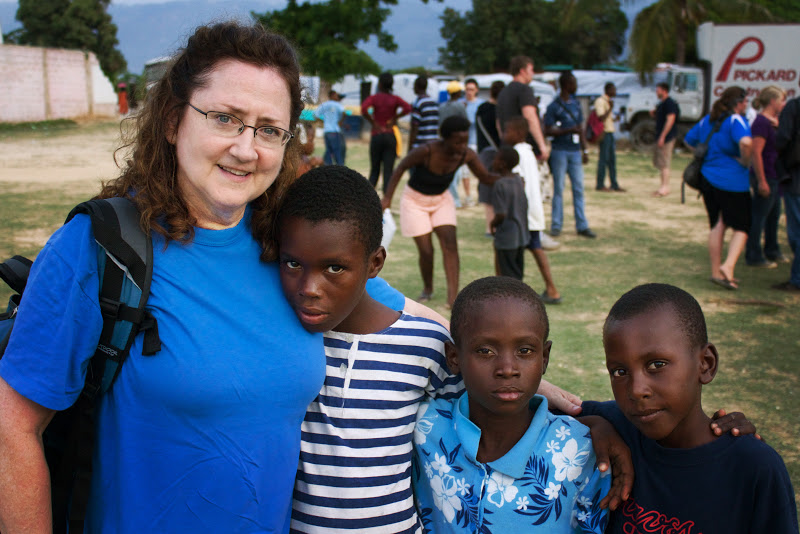
Haiti
Mission trip to Haiti after the earthquake
Preparing for the jungle of Peru? Heheheh. 

Stay tuned for the continuing adventures of Betty and Lyndsey in Peru. :-)


01 September 2012

The Rosa Bowl

Like many Americans, I consider college football kick-off weekend a national holiday. Apparently it has become so popular that Peru decided to celebrate as well, and closed everything on Thursday, and some Friday, in honor of the beginning of the best season of the year!!

At least I think that's what I like to think happened... Although it might be more likely that kick-off weekend just happened to coincide with an important Catholic religious holiday here: Dia de Santa Rosa de Lima. (Saint Rose of Lima Day)


Thursday, August 30th, was Dia de Santa Rosa de Lima, the first saint of the Americas, and the patron saint of Lima, so it's a fairly big deal around here. Her liturgical feast was inserted into the Roman Catholic Calendar of Saints in 1729 for celebration initially on August 30, because August 24, the anniversary day of her death, is the feast of Saint Bartholomew the Apostle and August 30 was the closest date not already occupied by a well-known saint. Pope Paul VI's 1969 reform of the Roman Catholic calendar of saints, made August 23 available, the day on which her feast day is now celebrated throughout the world, including Spain, but excluding Peru and some other Latin American countries, where August 30 is a public holiday in her honor. She is the patroness of native Indian people of the Americas; of gardeners; of florists; of the City of Lima; of Peru; of the New World; of Sittard, the Netherlands; of India; of people misunderstood for their piety and of the resolution of family quarrels. Locally she is also the patron saint of the Peruvian Police, so the day after hers was an optional holiday in their honor. 


I'm sure she was a very nice person, but based on what I've read, she was also a little nutso. You can read what Wikipedia has to say about her, but the short version is she was always very "holy" and did nice things for the poor and sick in colonial Lima. She took the name Rose at her confirmation because a servant claimed to have seen her face transform into a rose when she was a baby. She subscribed to intense physical penance and fasting, and when suitors began noticing her beauty, she rubbed hot peppers on her face to try to become less attractive. She eventually became a nun, and a recluse. She died at 31 after supposedly exactly predicting the day of her death. 


According to legend, she threw the key to her chastity belt down a well in downtown Lima, so people write letters to her with their wants and needs and go and throw them down the well. Thus on August 30th, her shrine and the well are utter chaos. Since this is a big deal for Lima and we have several projects about the city in the works, I figured it would be a good idea to go down and take in some of the activity, and boy am I glad I did. Although I've lived in Peru for more than a year, it is easy to live in my own little anglicized (semi-)tidy bubble and miss out on some of the things that help you get a real sense of the country and the culture. 


Traffic was sparse since most businesses were closed, so I waited a bit to find a cab and then overpaid to get downtown. Ah well, c'est la vie! (Oops, there goes my French again.) I asked the driver to drop me in the Plaza de Armas, but a couple blocks away traffic was being diverted for the festivities. I had just missed the big hoorah in the square at the Cathedral it seemed, but fortunately, I hadn't missed all the action. Lots of policemen were wandering about in dress uniform. I followed them backwards like a trail of ants down a side street to the mass of people. Apparently they were in the middle of a procession, but the process-ing was so slow that it was difficult to tell. 


A group of men in robes and capes with stylish rope "necklaces" and all sorts of patches and badges indicating their membership in...?some unknown group?... were carrying a large litter bearing a statue of Santa Rosa piled high with flowers through the crowded streets. Faithful devotees walked slowly backwards in front of the statue, some carrying rosaries or their own emblems of Santa Rosa. Every 50 feet or so, someone would ding a large bell mounted on the front of the litter and the men would stop, lower the conveyance, and a fresh group of similarly dressed men would take their place. Meanwhile a band played religious or festive tunes behind them and a throng of police followed. 


Every 100 feet, the procession stopped for a speech, or some sort of tribute at various locations, marked by colorful floral carpets carefully outlined on the street. Someone with a loudspeaker would laud Santa Rosa and explain what she was the patron of and why they were thankful for her. Some would pray. Each stop was sponsored by a various organization or department, and each had a fancy floral arrangement made. One of the priest guys would pick it up, climb up the litter, cross the statue with the floral arrangement, and then return it to the owner. When the stop was over, they'd walk over the floral carpet, party poppers were popped, the music began again, and on the tediously slow herd would move.


One particularly disturbing stop involved a large floral display with an arch of pink roses and a small statue of Santa Rosa on a table with flowers in front. Well, at least I thought it was a statue...until it moved. I then realized that it was in fact a tiny little girl dressed as the virgin saint, kneeling on the table clutching a rosary and stoically regarding the crowd. 


While waiting for the procession to arrive at the church where the statue was to be delivered, I wandered around the crowd. Very few tourists had managed to mingle over into this portion of the event. Most seemed to be devout Catholics venerating Santa Rosa. Many clutched pink roses to be laid at her shrine later, some wore pins or medallions with the saints image. The benefit of most Peruvian processions and parades I have seen is that they're not great at crowd control, which means as a photographer you have a lot more freedom to walk in the street and move around than you might in other places. If you have a big honkin' camera and aren't dressed like you're trekking Mt. Everest (read TOURIST) then they tend to assume you are involved officially somehow and don't pay much mind, at least in my experience. 


In front of the church two grand floral carpets were surrounded by men in suits, obviously officials of some sort. I wandered around them snapping away and deciding where to stand for the best shots of the coming performance. I took up a position over the shoulder of one of the gentlemen in a suit. While I fiddled with my camera he turned and asked me in Spanish: "How much *garble garble garble.*" Yeah... I didn't understand the second part of his sentence, I just knew he said "How much" and was pointing to my camera. I asked if he wanted to know how much the camera cost. He looked at me confused. 

Oh, you don't speak spanish, he says. 
No, I'm learning, I just didn't understand what you said. 
Ah, I wanted to know what the zoom is.

I show him the 24-105mm lens. 

Ah, that's very nice, he says. Are you French?
Haha. Noo. -I assure him I am not French, but I do speak French.
Yes I thought so! I can hear your accent. Where are you from? 
The U.S., I tell him.
That's an excellent camera. You should be careful with it around here downtown. There is a lot of crime. 
Thank you, I know. I live here.
Oh really!

We pause a while, the procession is moving into place and I am waiting for young children to come out and dance the marinera. Conversations in Spanish are stressful to me so I don't generally encourage them. But this older gentleman seems more curious about the tall camera-toting gringa than the somber religious festival taking place.


How did you learn French? He queried.
I was a student in France.  
Oh really? Where? Lyon? Marseille? Toulon?
Paris.
That's lovely. And what did you study there?
International relations. 
Ah yes! Like diplomacy and policy?
Yes sir. 
And you live in Peru now? Are you studying here as well?
No sir, I'm a photographer. 
Oh! You should come stand here and get a better view. 

- He scoots over to make a front row space for me on the curb next to him. 

I work for the police, he tells me, as he pulls out polarized sunglasses and slips them on. (It's winter and perpetually overcast in Lima right now, so I can only assume he is doing this for dramatic effect.)
For the PNP, he says, gesturing to where the abbreviation for the Policia Nacional del Peru is spelled out in the floral carpet that they sponsored. 
Oh that's nice, I say, smiling politely. 
We all do! He says, gesturing at the ring of men surrounding the floral carpets. All of the men in suits, he says. 
Again I smile and nod, not really sure why he is telling me this.
See? - He holds up the official I.D. badge. Apparently I hadn't acted impressed enough by his high ranking position with the PNP and he thought maybe it was because I needed more proof? 
Ah, yes. -I ooo and aaah a little over the badge and he smiles proudly.- So if I stand over here, I'm really secure, right? I ask teasingly. 
Oh yes!! He chuckles. 

He keeps up the questioning a while longer, asking what I think of Peru and, of course, what I think of their food. Peru is an up-and-comer in the culinary world and apparently every Peruvian has gotten than memo, because it is invariably the second question I am asked by random people I meet. At least I can honestly tell them that I love their food! 

Do you have a Hotmail? He asks. 

This question catches me off guard. Hotmail is still very popular down here, but out of context and with the accent I almost don't know what he's talking about. I nod. 

Ok! Then I will give you my email, he says.

I dig in my bag and pull out a business card. They are in English but I have 200 of them, and not many opportunities to pass them out, so I try to give them out when I can. They'll only be valid another 5 months, so I have to hurry! 

Ooo! He says, when I pull out a card, impressed that I have something so professional, I think. He pulls a receipt out of his wallet and scawls his name and email on the back and trades me for my card. The children are about to dance, and the conversation stops, but my new friend watches out for me, making sure I have a clear shot and barking at priests who get in the way of my camera angle. I later notice that the very safety cautious police staffer has given me his full name and email on an ATM receipt. Hmm.


Things dissipated from there. Some people followed the statue into the church. I thanked my new friend and walked down the street to Santa Rosa's hermitage where the well is. I was planning on taking some photos of people throwing their letters in the well, but it was not to be. The line to enter either the church or the hermitage stretched out of the church grounds, around the corner, down a city block and disappeared into the masses. People in the line were literally jogging to keep up with the flow into the shrine to drop off their letters. Daylight was beginning to fade and being downtown alone with all my camera gear after dark isn't high on my list of smart things to do. So instead I wandered around in the street, watching people buy cards and pens from vendors to write their wishes to Santa Rosa on them. Nuns mingled with the crowds as cotton candy and chocolate treats were sold alongside "sacred" Santa Rosa figurines and recuerdos (souvenirs) of the shrine. 


With a full memory card in my camera I wandered back through downtown to grab a cab. I got in to head home, "You're French?" The cabbie asked. *Sigh.* Guess too much time away from Peru this summer let my inner Frenchy-ness take over again.  Might as well start brushing up on my français and just tell them "oui!" 

I hope you had a lovely kick-off weekend and that your teams pulled off a nice win. As always...


GO GATORS!

30 June 2012

Peruvians give their all to reach Amazon region for Christ


IQUITOS, Peru (BP) -- Just three days after his wife died, 72-year-old Edison Romero climbed into a cramped wooden boat for a journey down the Amazon. He could have stayed home to mourn, but he took a 12-hour trip from his village to Iquitos, Peru, to attend missions training.

"I just couldn't miss it," Romero said.
The School of Cross-cultural Missions that Romero attends near the city of Iquitos is one of three training centers launched by Peru a las Naciones (Peru to the Nations), a Peruvian Baptist organization. 

Every two months, Romero and about 30 other participants and family members -- ranging from elderly adults to toddlers -- convene outside Bethany Evangelical Baptist Church in Iquitos. They pile into two crude metal buses with their luggage and a half-dozen live chickens for a jarring hour-long ride over a muddy road full of potholes.

When the road ends, the travelers -- loaded down with young children and luggage -- hike barefoot through a swampy mud pit. At the bank of the Nanay River, which flows into the Amazon, they cram into a narrow wooden boat. There's barely breathing room; the air is stifling. Then it's another 45-minute trip downriver to the jungle camp.

After they reach the shore by the camp, they haul their belongings down a dirt path to the wooden cabins -- covered with dried banana leaves and mosquito netting -- that will be home for three days. There's no electricity or hot water. And since there's no refrigeration, the live chickens will provide fresh food each day. The small children must occupy themselves without the help of modern conveniences, toys or physical comforts.

But no one complains.


CROSS-CULTURAL MISSIONS
Leaders of the group are Tommy and Beth Larner, International Mission Board missionaries from Texas. Tommy, who works with Peru a las Naciones, helped to start the training camp. He and Beth lead a team that teaches Bible storying, evangelism techniques, church-planting methods and other missions principles.

Training national believers in missions is crucial to reaching Peru with the Gospel, Tommy said.

"We can't [reach the world] by ourselves. There's just too much to be done," he said. "We could go to an unreached people group. But if I can send a bunch more Peruvians and invest my life in them, I can be more effective sending than I can going."

Cross-cultural missions often implies taking the Gospel to other countries. But the school near Iquitos teaches believers in the Amazon how to effectively share Christ in the many jungle villages throughout Peru.

"These [believers] live in cross-cultural missions," Tommy said. "Their passion is to go deeper and farther into the jungle where the Gospel has not been preached." Read More